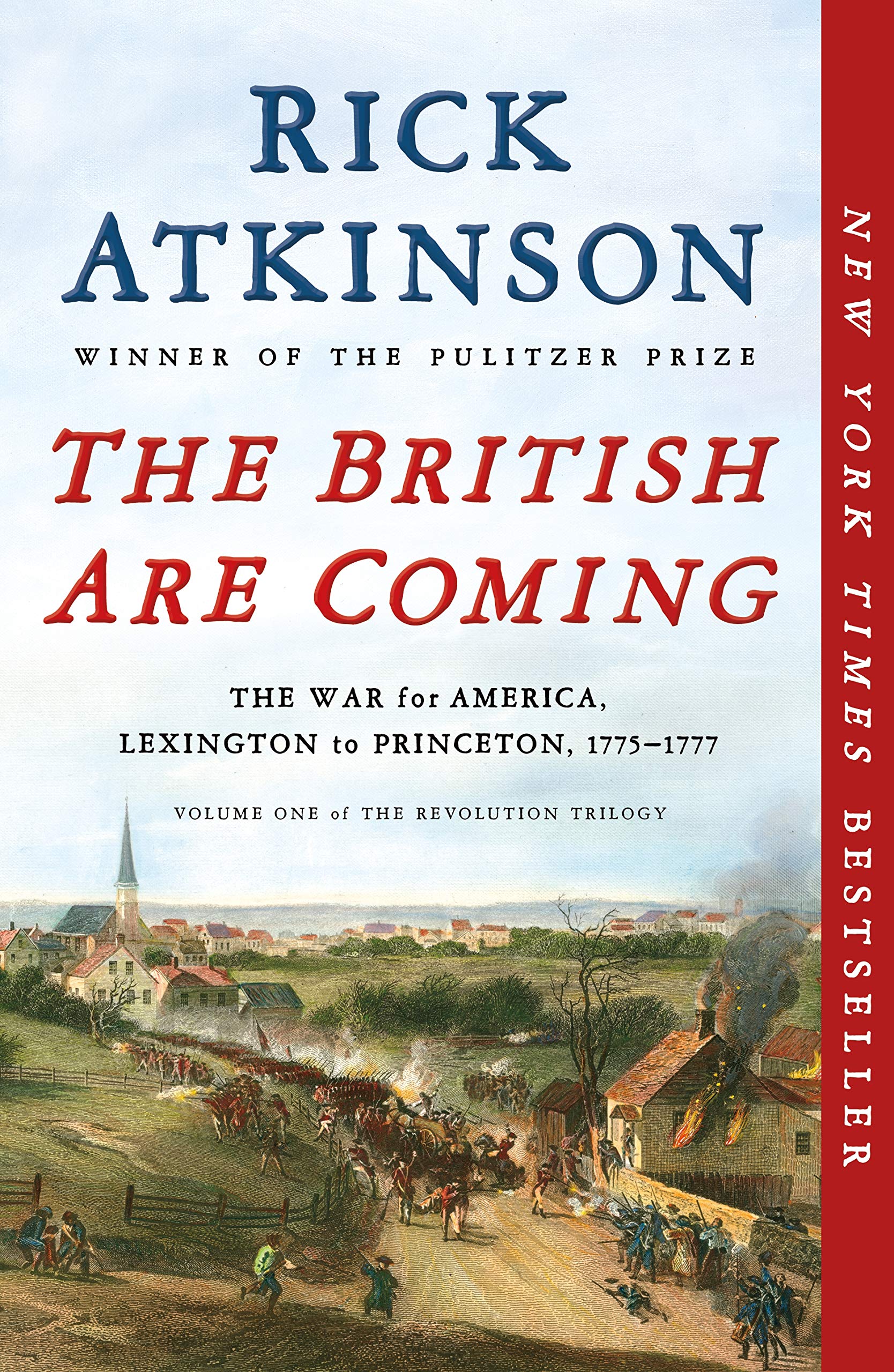
Book cover of The British Are Coming

The British Are Coming Summary

Humanity & Culture

By Rick Atkinson

Henry Holt and Co. · May 14, 2019

Summary

Rick Atkinson's The British Are Coming is a remarkable exploration of a crucial era. Atkinson's writing style is both accessible and authoritative, making complex historical events easy to understand for the general public. He delves into the political, social, and military aspects of the time, painting a comprehensive picture of the British impact. Through meticulous research, he uncovers lesser-known details that add depth to the historical narrative. Whether it's the strategic maneuvers on the battlefield or the cultural exchanges, every aspect is presented in a way that keeps readers engaged. This book is not just a dry recitation of facts; it's a living, breathing account of a bygone era. It's a great resource for anyone looking to expand their knowledge of history and gain a new understanding of the British role in shaping the world.

About the Author

Rick Atkinson is a renowned author. He specializes in historical writing. His style in works like "The British Are Coming" is vivid and detailed, bringing historical events to life with engaging storytelling.

Chapters

1

Introduction

"The British Are Coming" by Rick Atkinson is a captivating account of the early stages of the American Revolution. It delves into the events that led to the outbreak of the war, the key players involved, and the significant battles that shaped the course of history. This summary will guide you through the main aspects of the book, enabling you to grasp its core value without having to read the entire text.

2

The Pre-Revolution Tensions

In the years leading up to the American Revolution, there was a growing sense of discontent among the American colonists. The British government imposed a series of taxes and regulations on the colonies, such as the Stamp Act and the Townshend Acts. These measures were seen as unjust by the colonists, who felt that they were being taxed without proper representation in the British Parliament.The colonists began to organize protests and boycotts against British goods. Groups like the Sons of Liberty played a crucial role in mobilizing the people. They used various means, including pamphlets and public meetings, to spread the message of resistance. The Boston Massacre in 1770, where British soldiers opened fire on a crowd of colonists, further inflamed the situation. It became a symbol of British oppression and was widely publicized throughout the colonies, fueling anti-British sentiment.

3

The Road to War

As the tensions continued to rise, the colonists started to take more radical steps. The First Continental Congress was convened in 1774. Delegates from the colonies met to discuss their response to the British policies. They agreed on a series of measures, including an economic boycott of British goods.In the meantime, the British government was determined to assert its authority over the colonies. General Thomas Gage was sent to Massachusetts to maintain order. He began to fortify Boston and take measures to disarm the colonists. This led to a sense of unease among the colonists, who started to stockpile weapons and prepare for a possible conflict.The events at Lexington and Concord in April 1775 marked the beginning of the armed conflict. British troops were sent to seize a cache of weapons stored by the colonists in Concord. On their way, they clashed with local militia at Lexington. Shots were fired, and this skirmish is often considered the first battle of the American Revolution.

4

The Early Battles

After the initial skirmishes at Lexington and Concord, the war quickly escalated. The colonists, led by local militia, were able to hold their ground against the British in some early battles. The Battle of Bunker Hill, although a technical victory for the British, was a significant moral victory for the colonists.The British forces, under the command of General William Howe, had a large and well-equipped army. However, they faced difficulties in dealing with the guerrilla-style warfare tactics employed by the colonists. The colonists were familiar with the local terrain, which gave them an advantage in some battles.The early battles also saw the emergence of some key leaders on the American side. George Washington was appointed as the commander-in-chief of the Continental Army. His leadership skills and determination were crucial in keeping the army together during the difficult early days of the war.

5

The Continental Army

The Continental Army faced numerous challenges in its early days. It was made up of a diverse group of men, including farmers, merchants, and artisans. Many of them had little to no military training. There were also issues with supply and equipment. The army often lacked proper weapons, ammunition, and clothing.Washington worked hard to train and discipline the army. He introduced a series of reforms, including strict military discipline and regular training exercises. He also tried to improve the army's supply system, but this was a difficult task given the limited resources available in the colonies.Despite these challenges, the Continental Army gradually became more organized and effective. It was able to hold its own against the British in several battles, which was a significant achievement considering the odds they were facing.

5 more chapters available

Continue listening in the Spickor app — free download on the App Store.

Listen in App

Why Spickor?

At Spickor, we believe knowledge should have no paywalls. Every book summary can be unlocked for free by watching a short ad — or you can choose an ad-free subscription. Unlike other apps, there's no "1 book per day" free limit. Learn at your own pace, on your own terms.

FeatureSpickorBlinkistHeadway
Free accessAll books free via ad unlock1 book/day only1 book/day only
Book library2,200+ across 8 categories9,000+ (non-fiction only)2,000+ (personal growth focus)
Paid subscriptionNo forced subscription; ad-supportedRequired; from $99.99/yrRequired; from $89.99/yr
Audio for all summariesYesPremium onlyPremium only
Novels & fictionYesNoNo
PlatformsiOS (Android & Web in dev)iOS / Android / WebiOS / Android only

All Books, Truly Free

Unlock any book with a short ad. No daily limits, no hidden fees.

Listen for Free

Every summary includes high-quality audio. No "premium only" labels.

Beyond Self-Help

8 categories including business, technology, and novels.

Listen in App
8 m 18 s