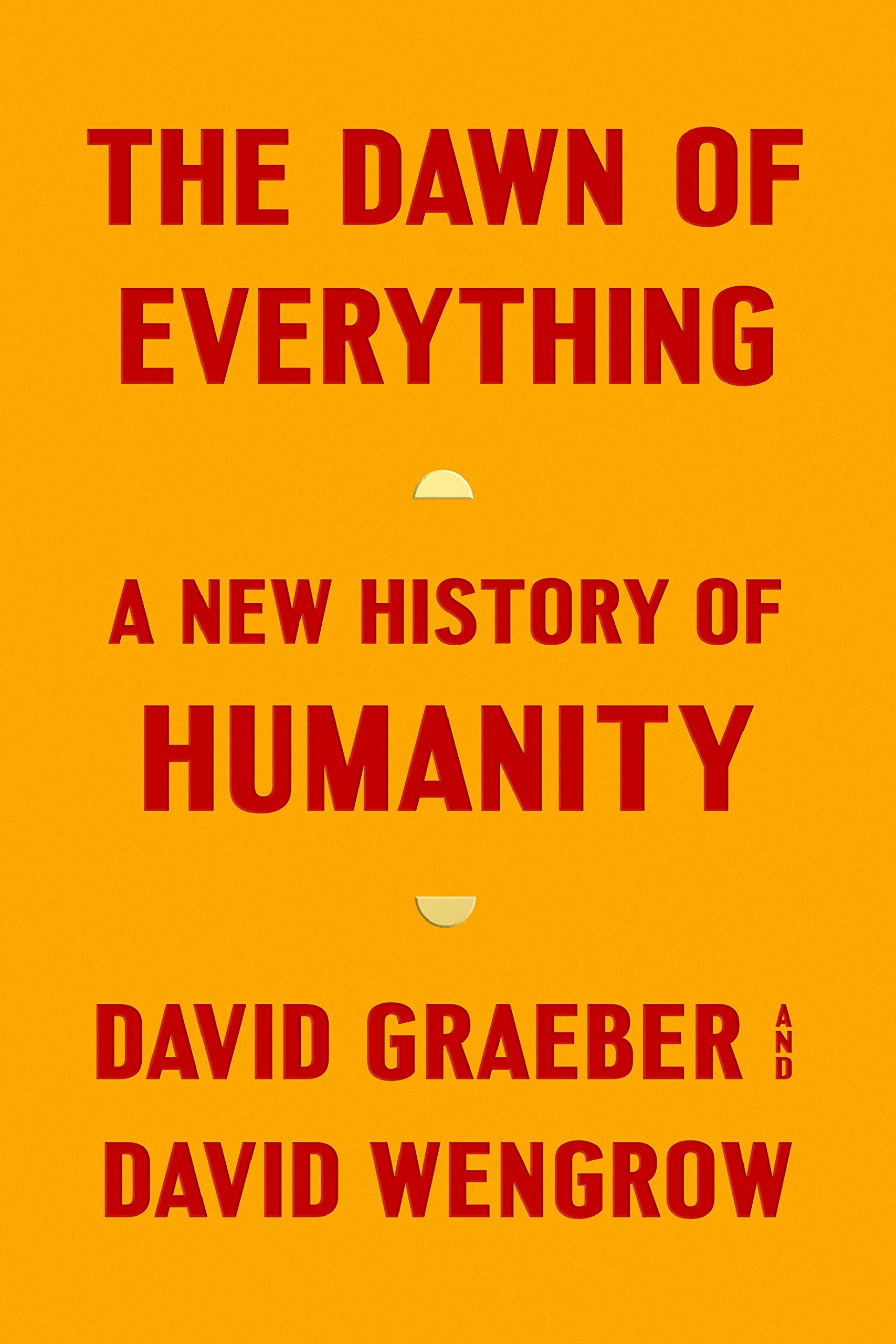
Book cover of The Dawn of Everything

The Dawn of Everything Summary

Humanity & Culture

By David Graeber

Farrar, Straus and Giroux · November 9, 2021

Summary

The Dawn of Everything by David Graeber is a groundbreaking exploration of human history. Graeber delves deep into the origins of human societies, shattering the traditional narrative that has long dominated our understanding. Instead of a linear progression from simple to complex, he presents a more nuanced and diverse picture of how early human communities functioned. Through extensive research and engaging storytelling, Graeber uncovers the various ways in which different cultures organized themselves, highlighting the creativity and adaptability of our ancestors. This book is not just a history lesson; it's a call to re-evaluate our assumptions about human nature and social organization. It encourages readers to think critically about the present and the future, by understanding the rich tapestry of our past. Whether you're a history buff or simply curious about the roots of human civilization, The Dawn of Everything offers a fascinating and eye-opening read.

About the Author

David Graeber is an anthropologist and author. He specializes in anthropology and social theory. His writing in *The Dawn of Everything* is thought-provoking, blending research with innovative perspectives.

Chapters

1

Introduction

"The Dawn of Everything" challenges long-held beliefs about the development of human societies. For a long time, the traditional view has been that human societies evolved in a linear fashion, from small hunter-gatherer groups to agricultural settlements, and then to complex states. This book shatters that simplistic model. It delves into the rich and diverse ways in which different human communities have organized themselves throughout history. By looking at various archaeological and anthropological evidence, it shows that there was no one-size-fits-all path for human social development.


2

The Myth of the "Original" Society

The idea of an "original" or "primitive" society is a myth. Many early human societies were far more complex and diverse than previously thought. For example, some hunter-gatherer groups were not just simple nomads. They had well-developed social structures, with rules for sharing resources, resolving conflicts, and making decisions. These groups often had a deep understanding of their environment and used sophisticated hunting and gathering techniques. They also engaged in long-distance trade, which indicates a level of social and economic complexity. The so-called "primitive" societies were not stagnant but were constantly evolving and adapting to their surroundings.

3

Agricultural Revolution Reconsidered

The agricultural revolution is often seen as a major turning point in human history, leading to the rise of settled communities and the development of civilization. However, this book argues that the transition to agriculture was not as straightforward as previously believed. In many cases, people did not simply abandon hunting and gathering for farming. There were periods of co-existence, where people practiced both activities. Some communities even reverted to hunting and gathering after trying agriculture. The decision to adopt agriculture was influenced by a variety of factors, such as environmental changes, population pressure, and social relationships. It was not an inevitable step in human progress.

4

The Rise of Inequality

Inequality is a central theme in human history. This book explores how inequality emerged in different societies. In some cases, it was related to the control of resources, such as land and food. As societies became more complex, certain individuals or groups were able to accumulate wealth and power. However, the development of inequality was not always a one-way process. There were also periods of resistance and attempts to reduce inequality. For example, some societies had mechanisms for redistributing resources to ensure a more equal distribution of wealth. The rise of inequality was not an inherent feature of human nature but was shaped by social, economic, and political factors.

5

The Role of Leadership

Leadership in early human societies was very different from what we see in modern states. In many small-scale societies, leadership was often temporary and based on personal qualities rather than formal positions. Leaders were expected to be good at resolving conflicts, making decisions, and representing the group. They did not have absolute power but were accountable to the community. As societies grew larger and more complex, leadership became more formalized. However, even in complex societies, there were still different models of leadership. Some were more democratic, while others were more autocratic. The nature of leadership was closely related to the social and political structure of the society.

4 more chapters available

Continue listening in the Spickor app — free download on the App Store.

Listen in App

Why Spickor?

At Spickor, we believe knowledge should have no paywalls. Every book summary can be unlocked for free by watching a short ad — or you can choose an ad-free subscription. Unlike other apps, there's no "1 book per day" free limit. Learn at your own pace, on your own terms.

FeatureSpickorBlinkistHeadway
Free accessAll books free via ad unlock1 book/day only1 book/day only
Book library2,200+ across 8 categories9,000+ (non-fiction only)2,000+ (personal growth focus)
Paid subscriptionNo forced subscription; ad-supportedRequired; from $99.99/yrRequired; from $89.99/yr
Audio for all summariesYesPremium onlyPremium only
Novels & fictionYesNoNo
PlatformsiOS (Android & Web in dev)iOS / Android / WebiOS / Android only

All Books, Truly Free

Unlock any book with a short ad. No daily limits, no hidden fees.

Listen for Free

Every summary includes high-quality audio. No "premium only" labels.

Beyond Self-Help

8 categories including business, technology, and novels.

Listen in App
8 m 27 s