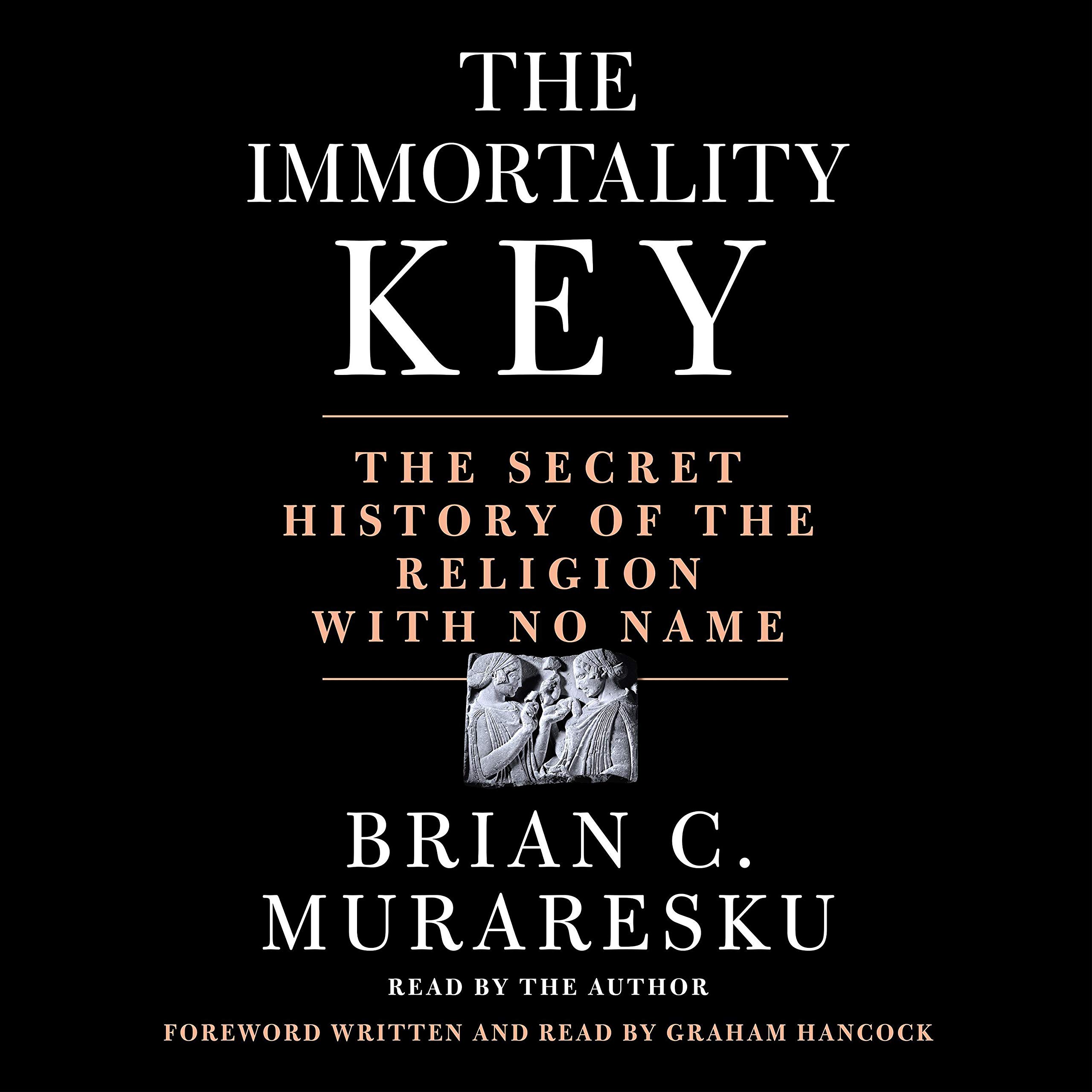
Book cover of The Immortality Key

The Immortality Key Summary

Humanity & Culture

By Brian C. Muraresku

Macmillan Audio · September 29, 2020

Summary

The Immortality Key, penned by Brian C. Muraresku, is a fascinating exploration that bridges the gap between ancient wisdom and modern understanding. Muraresku embarks on a quest to uncover the secrets hidden in the annals of history. He delves deep into ancient religious practices, myths, and rituals, examining how they might hold the key to immortality. Through meticulous research and engaging storytelling, the author weaves together a narrative that is both educational and thought-provoking. As you read, you'll be transported to different eras and cultures, learning about the various beliefs and practices surrounding the concept of eternal life. Whether you're a history buff, a fan of mythology, or simply curious about the mysteries of the universe, this book offers a wealth of knowledge and a fresh perspective on an age-old topic. It challenges conventional thinking and invites readers to consider the possibility that the answers to our most profound questions may lie in the past.

About the Author

Brian C. Muraresku is an author. He specializes in writing about esoteric and historical topics. His style in *The Immortality Key* is engaging, blending research with a narrative flow to explore ancient mysteries.

Chapters

1

Introduction to the Quest for Immortality

The pursuit of immortality is an age-old human aspiration. In "The Immortality Key", Brian C. Muraresku delves deep into this topic, exploring it through the lens of ancient mysteries and religious practices. The book takes readers on a journey through time, from the ancient Greek world to modern-day research, to uncover the secrets behind the so-called "immortality key."The idea of immortality has fascinated civilizations across the globe. It's not just about living forever in a physical sense but also about achieving a kind of spiritual transcendence. Muraresku starts by setting the stage, highlighting how different cultures have grappled with this concept. He points out that in many ancient religions, there were rituals and substances that were believed to hold the key to eternal life.This exploration is not just a historical curiosity. It has implications for our understanding of human nature, religion, and the search for meaning. In modern times, as we face the limitations of our physical existence, the ancient ideas about immortality can offer new perspectives. The book aims to bridge the gap between the past and the present, showing how the wisdom of the ancients can still be relevant today.

2

The Ancient Greek Mysteries

The ancient Greek mysteries were a set of secret religious ceremonies that were shrouded in secrecy and held great significance for the participants. At the heart of these mysteries was the Eleusinian Mysteries, which were celebrated in the town of Eleusis near Athens.These mysteries were centered around the story of Demeter and Persephone. Demeter, the goddess of agriculture, lost her daughter Persephone to Hades, the god of the underworld. The story represents the cycle of life, death, and rebirth. Participants in the Eleusinian Mysteries were promised a better afterlife and a deeper understanding of the universe.One of the most intriguing aspects of these mysteries was the use of a potion called kykeon. The exact ingredients of kykeon were a closely guarded secret. Some scholars believe that it may have contained ergot, a fungus that can produce hallucinogenic effects. The consumption of kykeon during the mysteries was thought to induce a state of altered consciousness, allowing the participants to have a direct spiritual experience.The ancient Greeks considered these mysteries so important that they were considered sacred. Those who participated were bound by an oath of secrecy, and any violation of this oath was severely punished. The Eleusinian Mysteries continued for over a thousand years, influencing not only Greek religion but also the development of Western religious and philosophical thought.

3

The Role of Psychedelics in Ancient Religions

Psychedelics have played a significant role in many ancient religions around the world. In addition to the Greek kykeon, there are numerous other examples of the use of mind-altering substances in religious ceremonies.In the Americas, indigenous cultures used substances like peyote and ayahuasca. Peyote is a small, spineless cactus that contains mescaline, a powerful hallucinogen. Native American tribes, such as the Huichol, have used peyote in their religious rituals for centuries. The use of peyote is seen as a way to communicate with the spirit world, to gain wisdom, and to heal the body and mind.Ayahuasca is a brew made from the Banisteriopsis caapi vine and other plants. It is used by many Amazonian tribes in religious and shamanic ceremonies. Ayahuasca is known for its intense hallucinogenic effects, which can include vivid visions, emotional purging, and a sense of connection to a higher power.In India, the ancient Vedic texts mention a mysterious substance called soma. The exact identity of soma is still debated, but some scholars believe that it may have been a psychedelic plant. Soma was considered a divine drink, and its consumption was associated with spiritual enlightenment and immortality.The use of psychedelics in ancient religions was not about getting high but rather about achieving a deeper spiritual connection. These substances were seen as tools to access a different realm of consciousness, where one could commune with the divine and gain insights into the nature of reality.

4

The Suppression of Psychedelic Knowledge

Over time, the knowledge and practice of using psychedelics in religious contexts have been suppressed. This suppression can be traced back to several factors, including the rise of Christianity and the development of modern science.Christianity, as it spread throughout the Roman Empire and later across Europe, condemned the use of mind-altering substances in religious ceremonies. The Church saw these practices as pagan and a threat to its authority. The Eleusinian Mysteries, for example, were eventually banned in the 4th century AD by the Christian emperor Theodosius I.The development of modern science also played a role in the suppression of psychedelic knowledge. In the 19th and 20th centuries, science became the dominant way of understanding the world. Psychedelics were often dismissed as dangerous drugs with no legitimate use. The medical and scientific communities focused on the negative aspects of psychedelics, such as their potential for abuse and addiction.In the 1960s, there was a brief resurgence of interest in psychedelics, especially with the work of researchers like Timothy Leary. However, this was quickly followed by a backlash. Governments around the world passed strict laws banning the use and possession of psychedelics, categorizing them as illegal drugs.This suppression has led to a loss of knowledge about the spiritual and therapeutic uses of psychedelics. Many of the ancient religious practices that involved these substances have been forgotten or are only now being rediscovered.

5

Modern Scientific Research on Psychedelics

In recent years, there has been a growing interest in psychedelics among the scientific community. Modern research has shown that psychedelics may have significant therapeutic potential.Studies on substances like psilocybin, the active ingredient in magic mushrooms, have shown promising results in treating mental health conditions such as depression, anxiety, and post-traumatic stress disorder (PTSD). In a controlled setting, psilocybin can induce a profound and transformative experience, helping patients to break free from negative thought patterns and emotional states.MDMA, also known as ecstasy, is another psychedelic that is being studied for its therapeutic effects. MDMA-assisted therapy has shown promise in treating PTSD, especially in cases where traditional therapies have failed. The drug helps patients to open up emotionally, making it easier to process traumatic memories.Ketamine, a dissociative anesthetic, has also been used off-label to treat depression. It works quickly, often providing relief to patients who have not responded to other antidepressant medications.This modern scientific research is starting to challenge the long-held view that psychedelics are simply dangerous drugs. It is opening up new possibilities for treating mental health conditions and understanding the human mind.

5 more chapters available

Continue listening in the Spickor app — free download on the App Store.

Listen in App

Why Spickor?

At Spickor, we believe knowledge should have no paywalls. Every book summary can be unlocked for free by watching a short ad — or you can choose an ad-free subscription. Unlike other apps, there's no "1 book per day" free limit. Learn at your own pace, on your own terms.

FeatureSpickorBlinkistHeadway
Free accessAll books free via ad unlock1 book/day only1 book/day only
Book library2,200+ across 8 categories9,000+ (non-fiction only)2,000+ (personal growth focus)
Paid subscriptionNo forced subscription; ad-supportedRequired; from $99.99/yrRequired; from $89.99/yr
Audio for all summariesYesPremium onlyPremium only
Novels & fictionYesNoNo
PlatformsiOS (Android & Web in dev)iOS / Android / WebiOS / Android only

All Books, Truly Free

Unlock any book with a short ad. No daily limits, no hidden fees.

Listen for Free

Every summary includes high-quality audio. No "premium only" labels.

Beyond Self-Help

8 categories including business, technology, and novels.

Listen in App
13 m 29 s