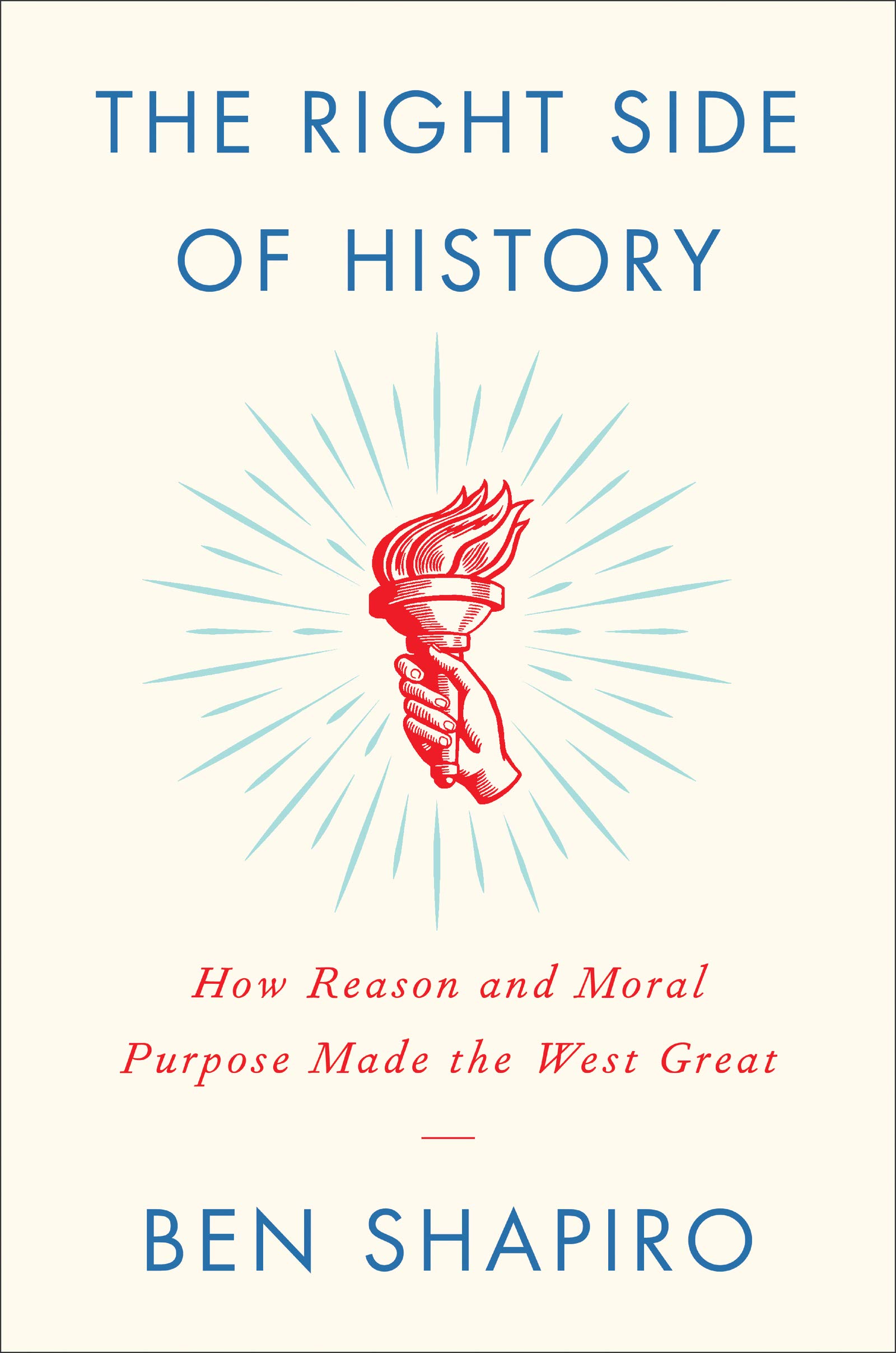
Book cover of The Right Side of History

The Right Side of History Summary

Humanity & Culture

By Ben Shapiro

Broadside Books · March 19, 2019

Summary

The Right Side of History by Ben Shapiro is a captivating exploration of historical events and their significance. Shapiro delves into various periods of history, from ancient times to the modern era, presenting a thought-provoking analysis. He challenges conventional views and encourages readers to think critically about the forces that have shaped our world. Through his well-researched and articulate writing, Shapiro provides a framework for understanding how different ideologies have influenced historical developments. Whether it's the rise and fall of empires or the evolution of political thought, he offers a comprehensive look at the right side of history. This book is not just a dry recitation of facts but a lively and engaging account that will keep readers hooked from start to finish. It's a great resource for anyone who wants to gain a deeper understanding of history and its impact on the present.

About the Author

Ben Shapiro is a well-known conservative political commentator and author. He focuses on political and historical topics. His writing in "The Right Side of History" is sharp, logical, and presents strong conservative viewpoints.

Chapters

1

Introduction: The Quest for Historical Truth

In "The Right Side of History," Ben Shapiro embarks on a journey to explore the concept of historical truth and its significance in modern society. He argues that understanding history is crucial for making informed decisions and shaping a better future. Shapiro challenges the idea that history is simply a collection of facts and events, but rather a complex narrative that is shaped by various perspectives and interpretations.The book begins by highlighting the importance of historical context in understanding the present. Shapiro emphasizes that history is not just about the past, but also about how it influences our current beliefs, values, and actions. He argues that by studying history, we can gain a deeper understanding of the forces that have shaped our world and make more informed choices about the future.

2

The Battle of Ideas

One of the central themes of the book is the battle of ideas between different political and philosophical ideologies. Shapiro explores the clash between conservatism and progressivism, arguing that these two ideologies represent fundamentally different views of the world and human nature. He contends that conservatism is based on the principles of individual liberty, limited government, and traditional values, while progressivism is characterized by a belief in social justice, equality, and the need for government intervention in the economy.Shapiro also examines the role of the media and academia in shaping public opinion and promoting certain ideologies. He argues that the mainstream media and many academic institutions have a liberal bias, which can lead to a distorted view of history and a lack of critical thinking. He calls for a more balanced and objective approach to the study of history, one that takes into account different perspectives and allows for a more informed debate.

3

The Importance of Western Civilization

Another key theme of the book is the importance of Western civilization and its contributions to the world. Shapiro argues that Western civilization is based on the principles of reason, individualism, and the rule of law, which have led to unprecedented progress and prosperity. He contends that these principles are under threat from various forces, including cultural relativism, political correctness, and the rise of authoritarianism.Shapiro also explores the relationship between Western civilization and other cultures, arguing that Western values have the potential to benefit all people, regardless of their background. He calls for a more confident and assertive defense of Western civilization, one that recognizes its unique contributions to the world and its importance in the face of global challenges.

4

The Role of Religion

Religion plays an important role in the book, as Shapiro argues that it has been a driving force in the development of Western civilization. He examines the influence of Christianity on Western values, such as the concept of the dignity of the individual and the importance of moral responsibility. He also explores the relationship between religion and politics, arguing that religious beliefs can provide a moral foundation for political decision-making.Shapiro challenges the idea that religion is incompatible with modernity and that it should be excluded from public life. He argues that religion can provide a source of meaning and purpose in a world that is often characterized by uncertainty and chaos. He calls for a more respectful and inclusive approach to religion, one that recognizes its importance in the lives of many people.

5

The Future of Conservatism

In the final chapters of the book, Shapiro looks to the future of conservatism and its role in shaping the world. He argues that conservatism is not just a political ideology, but a way of life that is based on the principles of individual liberty, limited government, and traditional values. He contends that conservatism has the potential to address the challenges of the 21st century, such as globalization, technological change, and the rise of authoritarianism.Shapiro also explores the role of conservatism in promoting social justice and equality. He argues that conservatism is not opposed to social justice, but rather believes that it can be achieved through individual responsibility, free markets, and limited government. He calls for a more inclusive and compassionate conservatism, one that cares about the well-being of all people and works to create a more just and prosperous society.

1 more chapters available

Continue listening in the Spickor app — free download on the App Store.

Listen in App

Why Spickor?

At Spickor, we believe knowledge should have no paywalls. Every book summary can be unlocked for free by watching a short ad — or you can choose an ad-free subscription. Unlike other apps, there's no "1 book per day" free limit. Learn at your own pace, on your own terms.

FeatureSpickorBlinkistHeadway
Free accessAll books free via ad unlock1 book/day only1 book/day only
Book library2,200+ across 8 categories9,000+ (non-fiction only)2,000+ (personal growth focus)
Paid subscriptionNo forced subscription; ad-supportedRequired; from $99.99/yrRequired; from $89.99/yr
Audio for all summariesYesPremium onlyPremium only
Novels & fictionYesNoNo
PlatformsiOS (Android & Web in dev)iOS / Android / WebiOS / Android only

All Books, Truly Free

Unlock any book with a short ad. No daily limits, no hidden fees.

Listen for Free

Every summary includes high-quality audio. No "premium only" labels.

Beyond Self-Help

8 categories including business, technology, and novels.

Listen in App
6 m 20 s