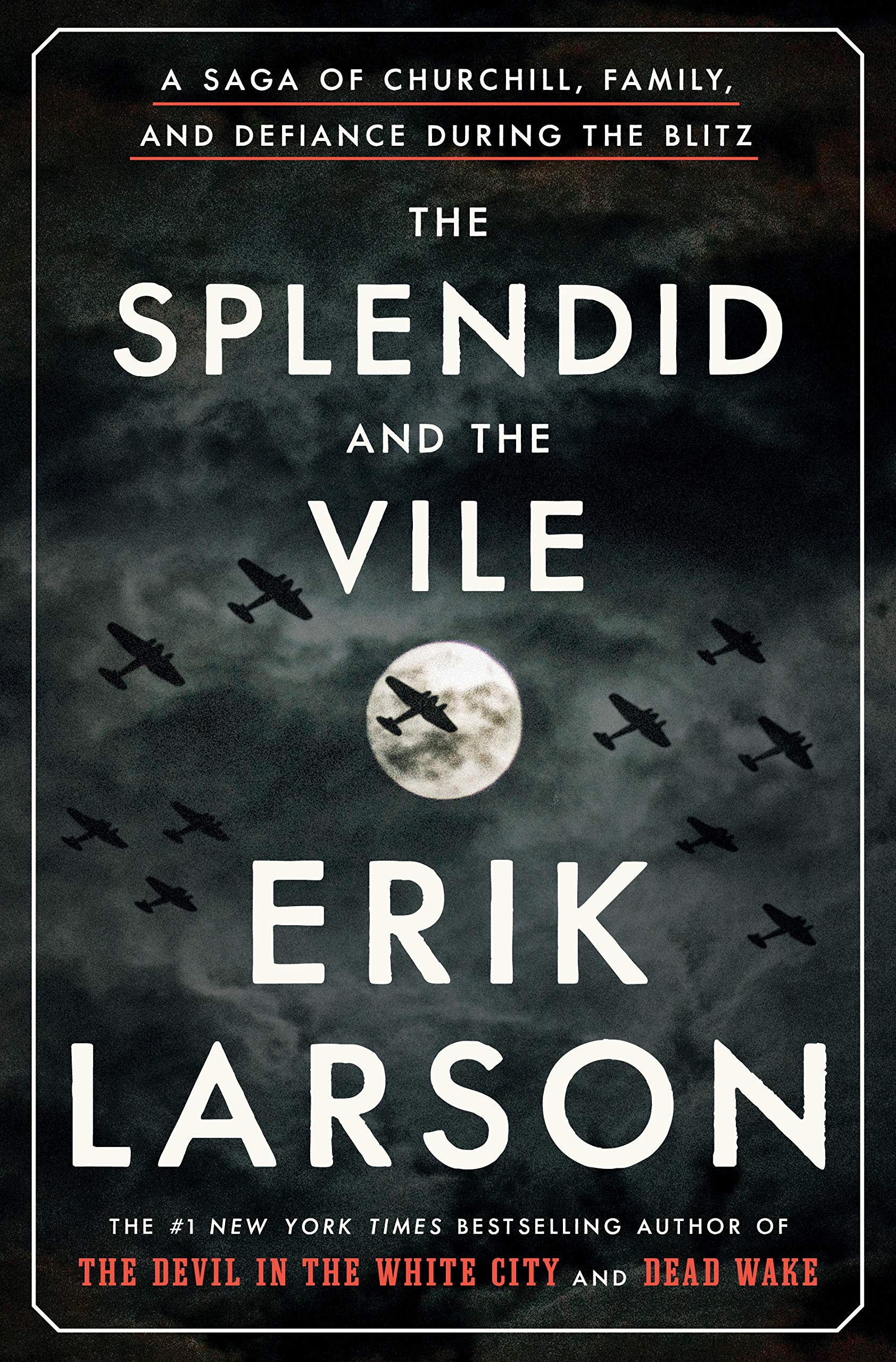
Book cover of The Splendid and the Vile

The Splendid and the Vile Summary

Humanity & Culture

By Erik Larson

Crown · February 25, 2020

Summary

The Splendid and the Vile by Erik Larson is a captivating historical narrative that delves deep into one of the most critical periods of the 20th century. Set during World War II, the book shines a light on the unwavering leadership of Winston Churchill as he navigated the United Kingdom through the turbulent waters of the Blitz. Larson masterfully weaves together a rich tapestry of events, capturing the essence of a nation under siege and the indomitable spirit of its people. Through a combination of meticulous research and engaging storytelling, readers are transported to a time when the fate of the free world hung in the balance. As bombs rained down on London, Churchill's resolve remained unshaken, inspiring a nation to stand firm against the onslaught. The book not only chronicles the political and military aspects of the war but also offers a glimpse into the personal lives of those affected by it. From the corridors of power to the bomb-shelters on the streets, Larson portrays the human side of history, highlighting the courage and sacrifice of ordinary people in extraordinary circumstances. Whether you're a history buff or simply interested in a gripping tale of leadership and resilience, The Splendid and the Vile is a must-read that will leave you with a newfound appreciation for the power of hope in the face of adversity.

About the Author

Erik Larson is a well-known American author. He excels in non-fiction writing, especially historical narratives. His style combines meticulous research with engaging storytelling, as seen in *The Splendid and the Vile*.

Chapters

1

Introduction to the Historical Context

The book "The Splendid and the Vile" unfolds against the backdrop of World War II, a time of global turmoil and upheaval. In 1939, Germany's invasion of Poland marked the official start of the war. As the conflict escalated, Britain found itself in a precarious position. Prime Minister Neville Chamberlain's policy of appeasement towards Germany had failed, and the country was on the verge of a direct confrontation with the powerful Nazi regime led by Adolf Hitler.In May 1940, Winston Churchill took over as the Prime Minister of the United Kingdom. At that time, the situation was extremely dire. France, a major ally, was on the verge of collapse, and the British Expeditionary Force was trapped at Dunkirk. Churchill's leadership was crucial as he faced the daunting task of rallying the nation and preparing for a possible invasion by the Germans. The Battle of Britain was looming, and the outcome of this battle would determine the fate of the British Isles and have far-reaching implications for the entire Allied cause.

2

Churchill's Leadership Style

Winston Churchill was a larger-than-life figure. His leadership style was characterized by unwavering determination, charisma, and a powerful oratory. Churchill had a deep understanding of history and used this knowledge to inspire the British people. He believed that Britain had a special destiny in the war, to stand up against tyranny and defend freedom.He worked long hours, often sleeping only a few hours a night. He was hands-on in his approach, constantly in touch with military commanders, government officials, and the public. He made it a point to visit bomb-damaged areas, showing solidarity with the people. His speeches, such as the famous "We shall fight on the beaches" speech, were broadcast across the nation and the world. These speeches not only boosted the morale of the British people but also sent a clear message to the enemy that Britain would never surrender.Churchill also had a complex personality. He was a heavy drinker and had a temper, but his flaws were overshadowed by his leadership qualities. He was not afraid to make tough decisions, even if they were unpopular. For example, he authorized the bombing of German cities, a controversial decision at the time, but one that he believed was necessary to weaken the enemy's war-making capabilities.

3

The Battle of Britain

The Battle of Britain was a critical turning point in World War II. It was an air-to-air and air-to-ground battle between the Royal Air Force (RAF) of Britain and the German Luftwaffe. The Germans aimed to gain air superiority over Britain in preparation for a possible invasion.The RAF was at a numerical disadvantage, but it had several advantages. The British had developed radar technology, which allowed them to detect incoming German aircraft. This gave the RAF pilots valuable time to prepare and intercept the enemy. The pilots of the RAF, known as the "Few," were highly skilled and dedicated. They fought bravely in the skies, often outnumbered.The battle lasted from July to October 1940. The Luftwaffe launched a series of attacks on British airfields, ports, and industrial centers. The British defenses held firm, and the RAF inflicted heavy losses on the German air force. As the battle progressed, the Germans changed their strategy and began to target British cities in what became known as the Blitz.The Battle of Britain was a victory for the British. It showed that the Germans could be defeated in the air, and it prevented a German invasion of Britain. The successful defense of the country was a huge boost to the morale of the British people and the Allied cause.

4

The Blitz and the Resilience of the British People

The Blitz was a sustained bombing campaign by the German Luftwaffe on British cities from September 1940 to May 1941. London was the main target, but other cities such as Liverpool, Birmingham, and Coventry also suffered heavy bombing.The bombing raids caused widespread destruction. Entire neighborhoods were flattened, and thousands of people were killed and injured. Despite the horror, the British people showed remarkable resilience. They took shelter in air-raid shelters, such as the London Underground stations, which became makeshift homes for many.People continued with their daily lives as much as possible. Factories kept producing war materials, and shops remained open. The sense of community was strong, with neighbors helping each other during and after the raids. Volunteers worked to rescue survivors and provide aid to the injured.The Blitz also had a psychological impact. It united the British people in their determination to resist the enemy. The government used the Blitz as a propaganda tool to show the world the strength and spirit of the British nation. The image of Londoners going about their business in the face of the bombing became a symbol of British resilience.

5

The Role of Intelligence

Intelligence played a crucial role in the war effort. The British had a sophisticated intelligence network, including code-breakers at Bletchley Park. They were able to decrypt German messages, which gave them valuable information about German military plans and operations.The code-breakers, led by figures such as Alan Turing, worked tirelessly to break the Enigma code used by the Germans. This breakthrough allowed the British to anticipate German attacks, protect convoys, and plan their own military operations. The intelligence gathered at Bletchley Park was so important that it was often referred to as "Ultra."The intelligence also helped in the Battle of Britain. By knowing the movements and intentions of the German Luftwaffe, the RAF could better allocate its resources and intercept the enemy. The information was carefully guarded, and only a select few in the government and military were aware of its source.

5 more chapters available

Continue listening in the Spickor app — free download on the App Store.

Listen in App

Why Spickor?

At Spickor, we believe knowledge should have no paywalls. Every book summary can be unlocked for free by watching a short ad — or you can choose an ad-free subscription. Unlike other apps, there's no "1 book per day" free limit. Learn at your own pace, on your own terms.

FeatureSpickorBlinkistHeadway
Free accessAll books free via ad unlock1 book/day only1 book/day only
Book library2,200+ across 8 categories9,000+ (non-fiction only)2,000+ (personal growth focus)
Paid subscriptionNo forced subscription; ad-supportedRequired; from $99.99/yrRequired; from $89.99/yr
Audio for all summariesYesPremium onlyPremium only
Novels & fictionYesNoNo
PlatformsiOS (Android & Web in dev)iOS / Android / WebiOS / Android only

All Books, Truly Free

Unlock any book with a short ad. No daily limits, no hidden fees.

Listen for Free

Every summary includes high-quality audio. No "premium only" labels.

Beyond Self-Help

8 categories including business, technology, and novels.

Listen in App
11 m 10 s