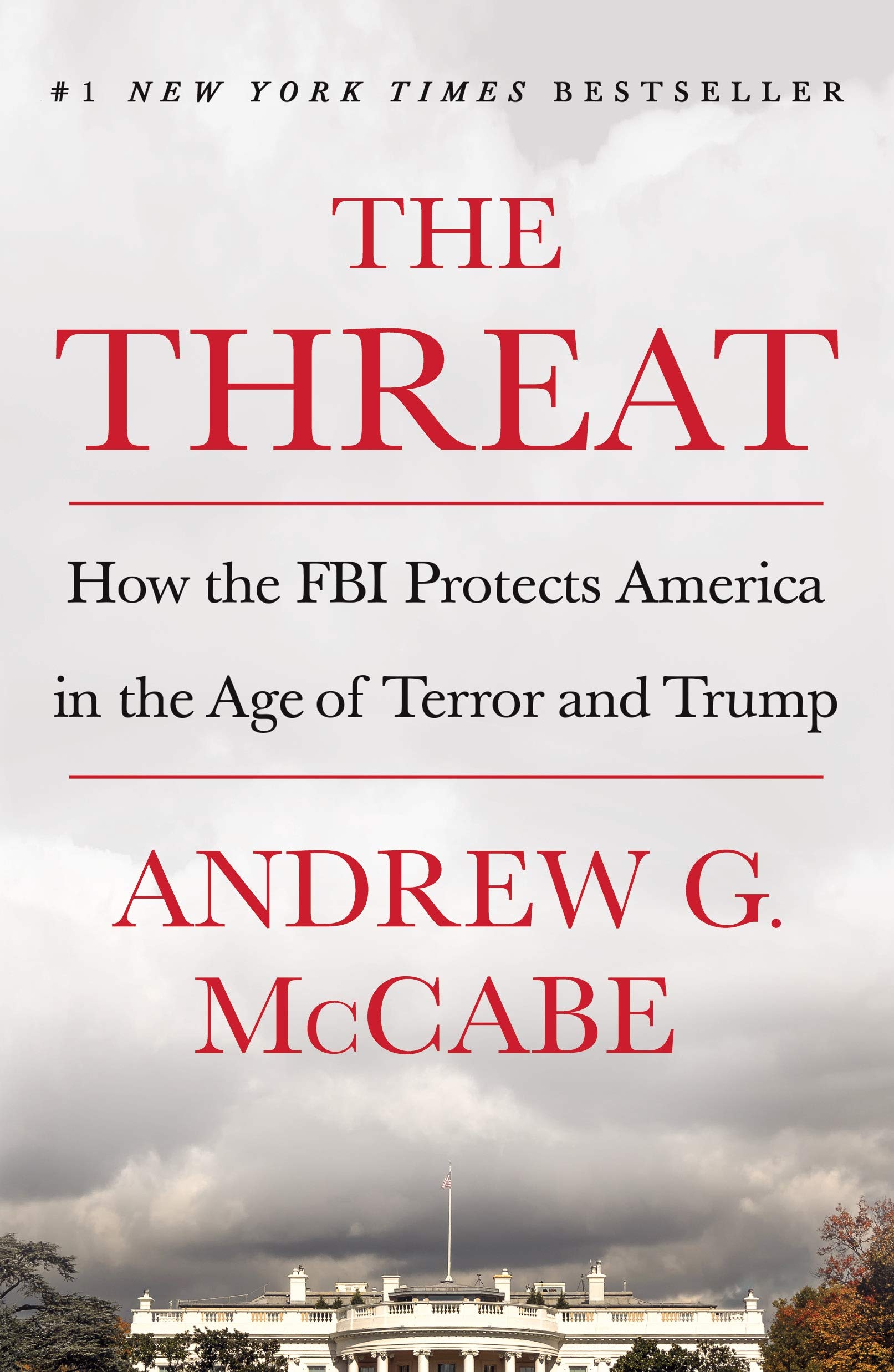
Book cover of The Threat

The Threat Summary

Humanity & Culture

By Andrew G. McCabe

St. Martin's Press · February 19, 2019

Summary

The Threat by Andrew G. McCabe is a remarkable book that offers a deep and engaging exploration of various critical issues. McCabe, with his in-depth knowledge and experience, presents a narrative that is both informative and captivating. The book takes the readers through a series of events, shedding light on aspects that are often overlooked. It combines real-world facts with a compelling storytelling style, making it accessible to a wide range of readers. Whether it's the political landscape or the challenges faced in different sectors, McCabe presents a comprehensive view. His writing is clear and concise, ensuring that the readers can easily follow the story. The Threat is not just a book; it's an opportunity to gain a new understanding of the world we live in. It challenges the readers to think critically about the issues presented and encourages them to engage in meaningful discussions. Overall, it is a well-written and impactful book that is sure to leave a lasting impression.

About the Author

Andrew G. McCabe is a former FBI official. He writes in the crime-related and national security spheres. His style in "The Threat" is detailed and fact-based, offering in-depth insights into relevant events.

Chapters

1

Introduction to the Threat Landscape

In "The Threat," Andrew G. McCabe delves into the complex and ever-evolving threat landscape that the United States faces. The book begins by highlighting the various types of threats that are not only physical but also digital and political. These threats come from a wide range of sources, including foreign governments, terrorist organizations, and even domestic actors with malicious intent.The digital age has brought about new challenges. Cyberattacks have become a common occurrence, targeting government agencies, businesses, and critical infrastructure. These attacks can disrupt services, steal sensitive information, and cause significant economic damage. For example, state-sponsored hackers may try to infiltrate government databases to gain access to classified information. Terrorist organizations also pose a continuous threat. They use various means, such as social media, to recruit new members and plan attacks. Their goals can range from causing mass casualties to spreading fear and chaos. The book emphasizes that these threats are not static; they adapt and change over time, making it crucial for the United States to stay vigilant.


2

The Role of Law Enforcement

Law enforcement agencies play a vital role in combating these threats. McCabe discusses how the Federal Bureau of Investigation (FBI) is at the forefront of this fight. The FBI has the responsibility of investigating and preventing criminal activities, both domestic and international. One of the key functions of the FBI is intelligence gathering. Agents collect information from various sources, including informants, surveillance, and data analysis. This intelligence is then used to identify potential threats and develop strategies to neutralize them. For instance, if the FBI receives intelligence about a possible terrorist attack, it can take proactive measures to prevent it.The FBI also works closely with other law enforcement agencies at the local, state, and federal levels. This collaboration is essential for sharing information and coordinating efforts. By working together, these agencies can cover a wider area and respond more effectively to threats.

3

Political Interference and Challenges

The book also addresses the issue of political interference in law enforcement. McCabe details how political pressures can sometimes impede the work of the FBI. Politicians may try to influence investigations for their own gain, which can undermine the integrity of the law enforcement process.In some cases, political leaders may try to discredit the FBI or its agents. This can create a hostile environment for law enforcement officers and make it difficult for them to carry out their duties effectively. McCabe argues that the independence of law enforcement is crucial for maintaining the rule of law. Another challenge is the public's perception of law enforcement. In an era of social media and 24-hour news cycles, misinformation can spread quickly. This can lead to a negative perception of the FBI and other law enforcement agencies, even when they are acting in the best interests of the public.

4

International Threats and Diplomacy

The United States faces numerous international threats. Foreign governments may engage in activities such as espionage, cyberattacks, and attempts to influence U.S. elections. McCabe discusses how the U.S. government must balance its security needs with diplomatic relations.Diplomacy plays a crucial role in managing these threats. The United States must work with other countries to share intelligence and coordinate efforts to combat common threats. For example, through international agreements, countries can cooperate on issues such as extradition and the sharing of cyber-security information.However, diplomacy is not always easy. Different countries have different interests and priorities, and it can be challenging to reach consensus. The book also mentions the importance of maintaining a strong military presence as a deterrent against potential threats.

5

Cyber-Security and Data Protection

In the digital age, cyber-security is of utmost importance. McCabe explains how the United States must protect its critical infrastructure, such as power grids, water systems, and financial institutions, from cyberattacks. These systems are vulnerable because they rely heavily on computer networks.Data protection is also a major concern. With the increasing amount of personal and sensitive information being stored online, there is a risk of data breaches. Hackers can steal this information and use it for various purposes, such as identity theft or financial fraud.The book suggests that the government and private sector need to work together to improve cyber-security. This includes investing in advanced technologies, training personnel, and developing better security protocols. For example, companies can implement multi-factor authentication and encryption to protect their data.

5 more chapters available

Continue listening in the Spickor app — free download on the App Store.

Listen in App

Why Spickor?

At Spickor, we believe knowledge should have no paywalls. Every book summary can be unlocked for free by watching a short ad — or you can choose an ad-free subscription. Unlike other apps, there's no "1 book per day" free limit. Learn at your own pace, on your own terms.

FeatureSpickorBlinkistHeadway
Free accessAll books free via ad unlock1 book/day only1 book/day only
Book library2,200+ across 8 categories9,000+ (non-fiction only)2,000+ (personal growth focus)
Paid subscriptionNo forced subscription; ad-supportedRequired; from $99.99/yrRequired; from $89.99/yr
Audio for all summariesYesPremium onlyPremium only
Novels & fictionYesNoNo
PlatformsiOS (Android & Web in dev)iOS / Android / WebiOS / Android only

All Books, Truly Free

Unlock any book with a short ad. No daily limits, no hidden fees.

Listen for Free

Every summary includes high-quality audio. No "premium only" labels.

Beyond Self-Help

8 categories including business, technology, and novels.

Listen in App
9 m 39 s