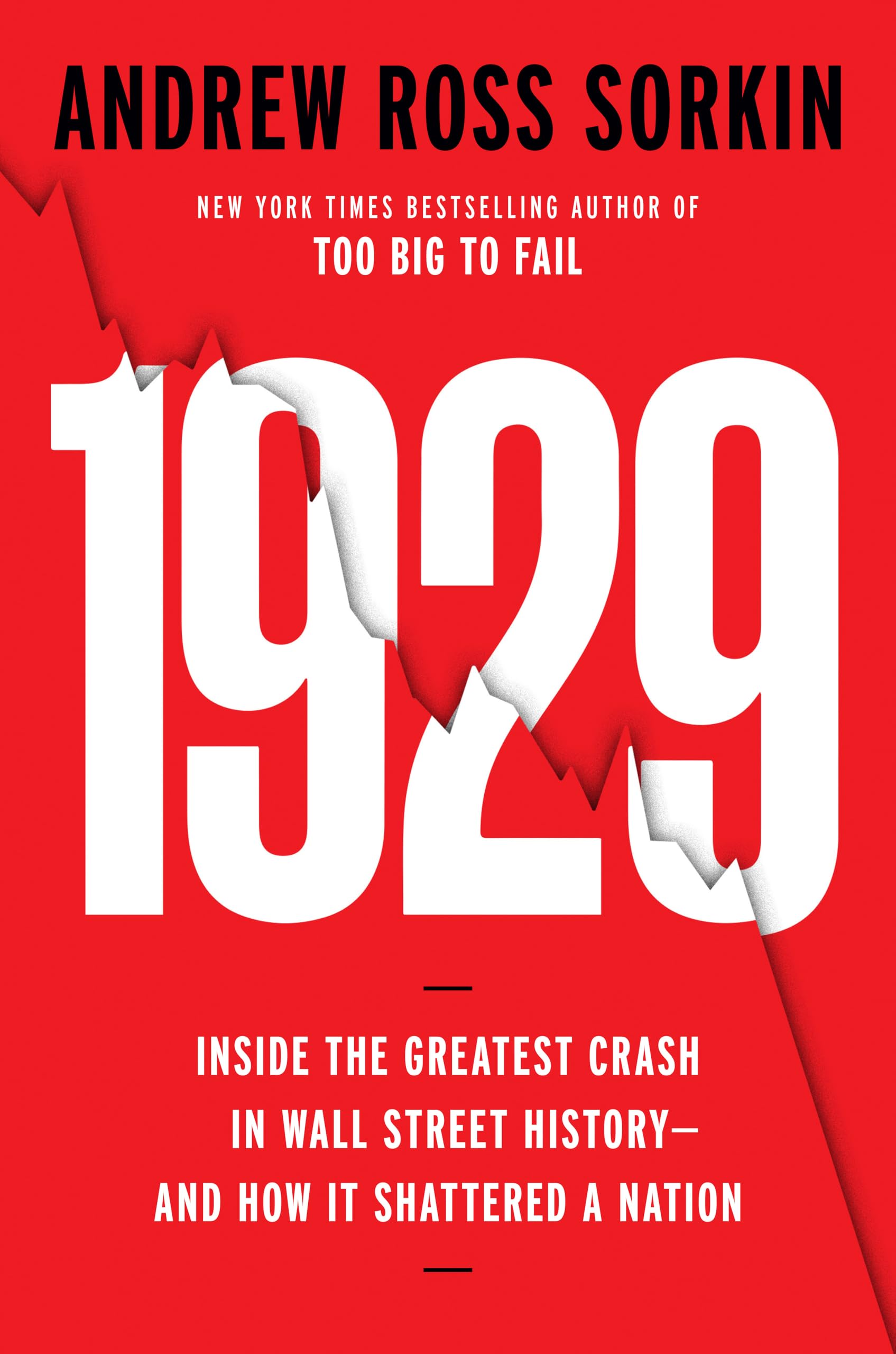
Book cover of 1929

1929 Summary

Humanity & Culture

By Andrew Ross Sorkin

Viking · October 14, 2025

Summary

'1929' by Andrew Ross Sorkin is a captivating exploration of a year that would leave an indelible mark on history. The year 1929 was a period of great upheaval, both economically and socially. Sorkin takes readers on a journey through the various aspects of this year, from the booming stock market to the growing social unrest. He delves into the lives of key figures, including business leaders, politicians, and ordinary people, to paint a vivid picture of the times. The book not only details the events leading up to the famous stock market crash but also examines the broader implications of this event on the global economy and society. Through meticulous research and engaging storytelling, Sorkin makes this complex period accessible to a wide audience. Whether you're interested in history, economics, or just a good story, '1929' offers a fascinating look at a year that changed the world.

About the Author

Andrew Ross Sorkin is a well-known financial journalist and author. He specializes in writing about finance and business. His writing style is detailed and incisive, as seen in his work "1929".

Chapters

1

Introduction to "1929"

"1929" by Andrew Ross Sorkin is a profound exploration of the pivotal year in American history. This year witnessed the stock-market crash that led to the Great Depression, which had far-reaching consequences not only for the United States but also for the global economy. The book delves into the events, people, and economic factors that contributed to this catastrophic event.


2

The Roaring Twenties: A Prelude to Disaster

The 1920s in America were known as the "Roaring Twenties." It was a time of great prosperity, technological advancement, and cultural change. Industries such as automobiles, radio, and electricity were booming. The stock market was on a seemingly endless upward trajectory, and people from all walks of life were investing in stocks. The widespread use of credit allowed consumers to buy more goods, which further fueled economic growth. However, beneath the surface of this prosperity, there were underlying problems. The gap between the rich and the poor was widening, and many industries were overproducing. Agricultural sectors were already in a slump, and farmers were struggling with debt. The easy availability of credit also led to a false sense of security, as people were borrowing beyond their means.

3

The Stock Market Mania

During the late 1920s, the stock market became the center of attention. Stock prices were rising at an astonishing rate, and investors were making huge profits. Many people who had never invested in stocks before were lured by the promise of quick wealth. The use of margin buying, where investors could buy stocks with a small amount of their own money and borrow the rest, became widespread. This increased the potential for both large gains and large losses. Stockbrokers encouraged more and more people to invest, and there was a general sense of euphoria in the market. However, this mania was not sustainable. As more and more people bought stocks, the prices became artificially inflated, and the market was becoming increasingly unstable.

4

The Warning Signs

There were several warning signs that the stock market was in trouble. Some economists and financial experts were raising concerns about the overvaluation of stocks and the excessive use of credit. The Federal Reserve also started to take notice and began to raise interest rates in an attempt to cool down the overheated market. However, these efforts were not enough to prevent the impending crash. Many investors ignored the warning signs, believing that the market would continue to rise indefinitely. In addition, the lack of proper regulation in the financial sector allowed for unethical practices such as insider trading and market manipulation, which further contributed to the instability of the market.

5

The Crash of 1929

On October 24, 1929, also known as "Black Thursday," the stock market began to tumble. Panic selling ensued as investors rushed to sell their stocks. The volume of trading was so high that the stock-ticker machines could not keep up. By the end of the day, the market had lost a significant amount of value. The following week, on October 29, 1929, or "Black Tuesday," the situation worsened. The market crashed, and billions of dollars were wiped out. Stock prices plummeted, and many investors lost their life savings. The crash was not only a financial disaster but also a psychological blow to the nation. It shattered the confidence of the American people in the economy and the financial system.

6 more chapters available

Continue listening in the Spickor app — free download on the App Store.

Listen in App

Why Spickor?

At Spickor, we believe knowledge should have no paywalls. Every book summary can be unlocked for free by watching a short ad — or you can choose an ad-free subscription. Unlike other apps, there's no "1 book per day" free limit. Learn at your own pace, on your own terms.

FeatureSpickorBlinkistHeadway
Free accessAll books free via ad unlock1 book/day only1 book/day only
Book library2,200+ across 8 categories9,000+ (non-fiction only)2,000+ (personal growth focus)
Paid subscriptionNo forced subscription; ad-supportedRequired; from $99.99/yrRequired; from $89.99/yr
Audio for all summariesYesPremium onlyPremium only
Novels & fictionYesNoNo
PlatformsiOS (Android & Web in dev)iOS / Android / WebiOS / Android only

All Books, Truly Free

Unlock any book with a short ad. No daily limits, no hidden fees.

Listen for Free

Every summary includes high-quality audio. No "premium only" labels.

Beyond Self-Help

8 categories including business, technology, and novels.

Listen in App
8 m 28 s