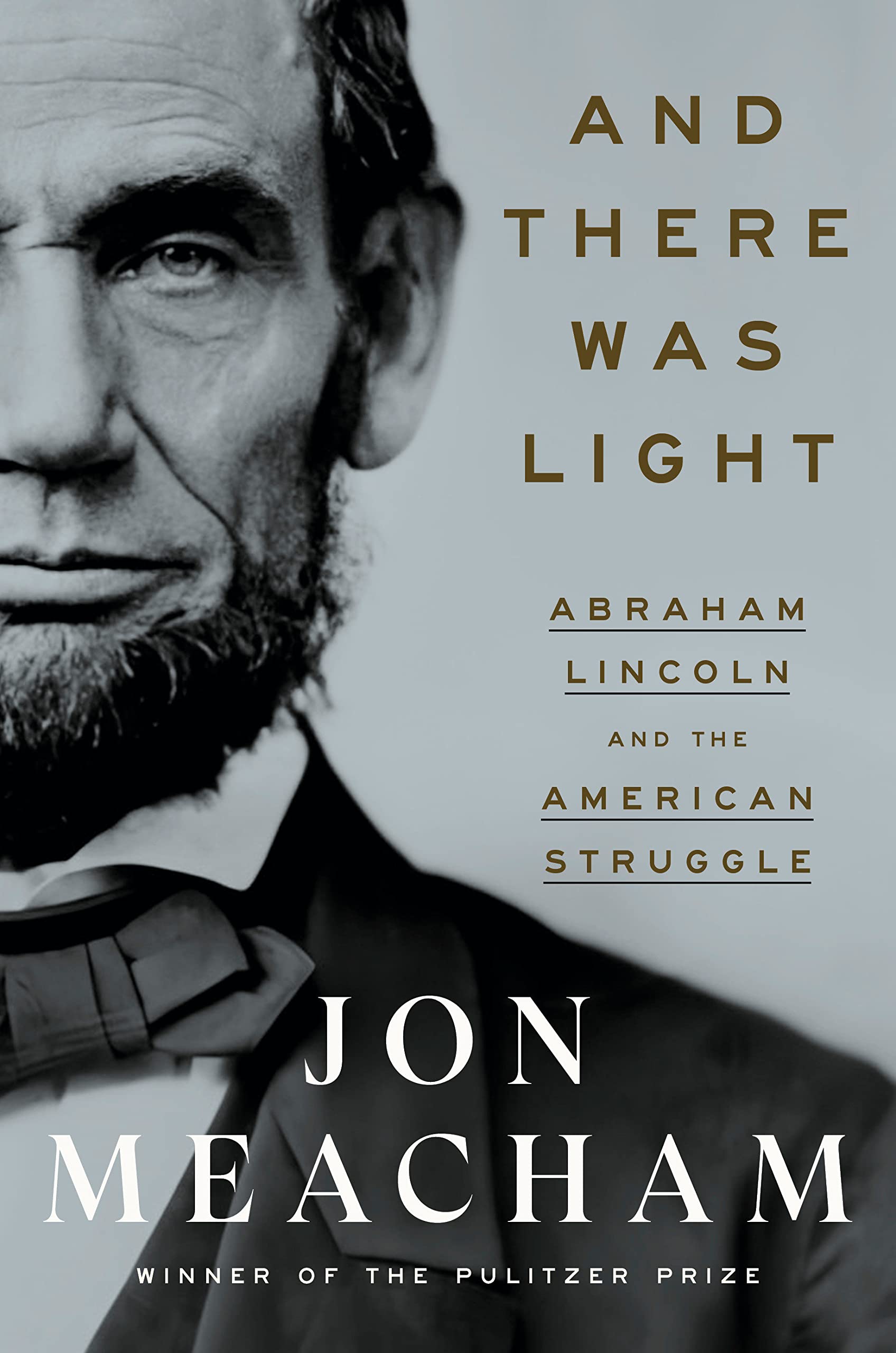
Book cover of And There Was Light

And There Was Light Summary

Humanity & Culture

By Jon Meacham

Random House · October 18, 2022

Summary

'And There Was Light' by Jon Meacham offers a captivating exploration of Abraham Lincoln's life and legacy. Meacham, with his masterful storytelling skills, takes readers through the various stages of Lincoln's journey, from his humble beginnings to his rise as one of America's most iconic presidents. The book not only details Lincoln's political achievements, such as leading the nation through the Civil War and issuing the Emancipation Proclamation, but also delves deep into his personal character. It shows how Lincoln's empathy, wisdom, and unwavering determination in the face of adversity shaped his leadership style. As readers follow Lincoln's story, they witness how his decisions had far-reaching consequences for the United States and the world. Meacham's narrative is engaging and accessible, making it easy for anyone to understand the complexity of Lincoln's era and his significance in history. It's a book that reminds us of the power of integrity and leadership in times of crisis.

About the Author

Jon Meacham is a renowned author and historian. He specializes in writing biographies and historical works. His style is engaging, blending in-depth research with a narrative that brings historical figures vividly to life, as seen in *And There Was Light*.

Chapters

1

Introduction: The Man and His Era

Abraham Lincoln is one of the most iconic figures in American history. In "And There Was Light," Jon Meacham delves into the life of Lincoln, exploring his character, leadership, and the historical context in which he lived. This book takes us through Lincoln's journey from a humble background to the presidency, and his crucial role in shaping the United States during one of its most turbulent times.Lincoln was born in a log cabin in Kentucky in 1809. His early life was marked by hardship and limited opportunities. However, he was a self-taught man, with a strong desire for knowledge. He read voraciously, which helped him develop a deep understanding of law, politics, and human nature.The era in which Lincoln lived was a time of great change and conflict in America. The nation was divided over the issue of slavery, with the North and the South having fundamentally different economic and social systems. This division would eventually lead to the Civil War, a conflict that would test the very foundation of the United States.

2

Lincoln's Early Years and Political Aspirations

Lincoln's early years were filled with challenges. He worked various jobs, including as a store clerk, a surveyor, and a postmaster. Despite these humble beginnings, he was determined to make a mark in the political arena.He started his political career at the local level, serving in the Illinois state legislature. In the legislature, he was known for his ability to build consensus and his opposition to slavery. Although he was not yet a full-fledged abolitionist at this stage, he believed that slavery was morally wrong and that it should not be allowed to expand into new territories.Lincoln's political views were influenced by his reading of the Declaration of Independence and his belief in the equality of all men. He saw the United States as a nation founded on the principles of liberty and justice, and he was committed to upholding these values.During his time in the state legislature, Lincoln also developed his skills as a speaker. He was able to connect with people from different backgrounds and convey his ideas in a clear and compelling way. This ability would serve him well in his future political career.

3

The Road to the Presidency

As the issue of slavery became more and more divisive in the United States, Lincoln's political profile began to rise. He became involved in the new Republican Party, which was formed in opposition to the expansion of slavery.Lincoln's most famous political debates were the Lincoln-Douglas debates in 1858. These debates were a series of seven public discussions between Lincoln and Stephen A. Douglas, a well-known Democratic senator. The debates focused on the issue of slavery and its expansion into the western territories.In these debates, Lincoln presented a clear and moral argument against the spread of slavery. He argued that the nation could not continue to exist half-slave and half-free. Although he lost the Senate race to Douglas, these debates made Lincoln a national figure and helped him gain the support of many Republicans.In 1860, Lincoln was nominated as the Republican candidate for president. His victory in the presidential election was a turning point in American history. It was a signal to the South that the federal government was going to take a stronger stance against the expansion of slavery. This led to the secession of several southern states, which eventually led to the start of the Civil War.

4

The Civil War: A Nation Divided

The Civil War was a brutal and costly conflict that pitted the Union (the northern states) against the Confederacy (the southern states). At the start of the war, the Confederacy had some advantages, including a strong military leadership and a more experienced army. However, the Union had a larger population, more industrial resources, and a stronger navy.Lincoln faced many challenges during the war. He had to manage the military, deal with political opposition at home, and keep the nation together. He made some difficult decisions, such as suspending the writ of habeas corpus, which allowed for the arrest and detention of individuals without trial in some cases. This decision was controversial, but Lincoln believed it was necessary to maintain order and protect the Union.As the war progressed, Lincoln became more and more committed to the abolition of slavery. In 1862, he issued the Emancipation Proclamation, which declared that all slaves in the Confederate-held territories were to be set free. This was a significant step towards the end of slavery in the United States.The Proclamation also had a strategic impact on the war. It weakened the Confederacy by depriving it of its labor force and it encouraged African-Americans to join the Union army. By the end of the war, over 180,000 African-American soldiers had fought for the Union.

5

Lincoln's Leadership and Decision-Making

Lincoln's leadership style was characterized by his ability to listen to different opinions and make decisions based on the best interests of the nation. He surrounded himself with a diverse group of advisors, some of whom were his political rivals. He was not afraid to make tough decisions, even if they were unpopular.One of his key leadership qualities was his ability to communicate effectively. He used his speeches to inspire the nation and to explain his policies. His Gettysburg Address, delivered in 1863, is one of the most famous speeches in American history. In this speech, he redefined the purpose of the war as a struggle for freedom and equality, and he called on the nation to remember the sacrifices of the soldiers who had died in the war.Lincoln also had a great sense of humor, which helped him deal with the stress of the presidency. He used humor to defuse tense situations and to build relationships with his colleagues.

5 more chapters available

Continue listening in the Spickor app — free download on the App Store.

Listen in App

Why Spickor?

At Spickor, we believe knowledge should have no paywalls. Every book summary can be unlocked for free by watching a short ad — or you can choose an ad-free subscription. Unlike other apps, there's no "1 book per day" free limit. Learn at your own pace, on your own terms.

FeatureSpickorBlinkistHeadway
Free accessAll books free via ad unlock1 book/day only1 book/day only
Book library2,200+ across 8 categories9,000+ (non-fiction only)2,000+ (personal growth focus)
Paid subscriptionNo forced subscription; ad-supportedRequired; from $99.99/yrRequired; from $89.99/yr
Audio for all summariesYesPremium onlyPremium only
Novels & fictionYesNoNo
PlatformsiOS (Android & Web in dev)iOS / Android / WebiOS / Android only

All Books, Truly Free

Unlock any book with a short ad. No daily limits, no hidden fees.

Listen for Free

Every summary includes high-quality audio. No "premium only" labels.

Beyond Self-Help

8 categories including business, technology, and novels.

Listen in App
10 m 02 s